




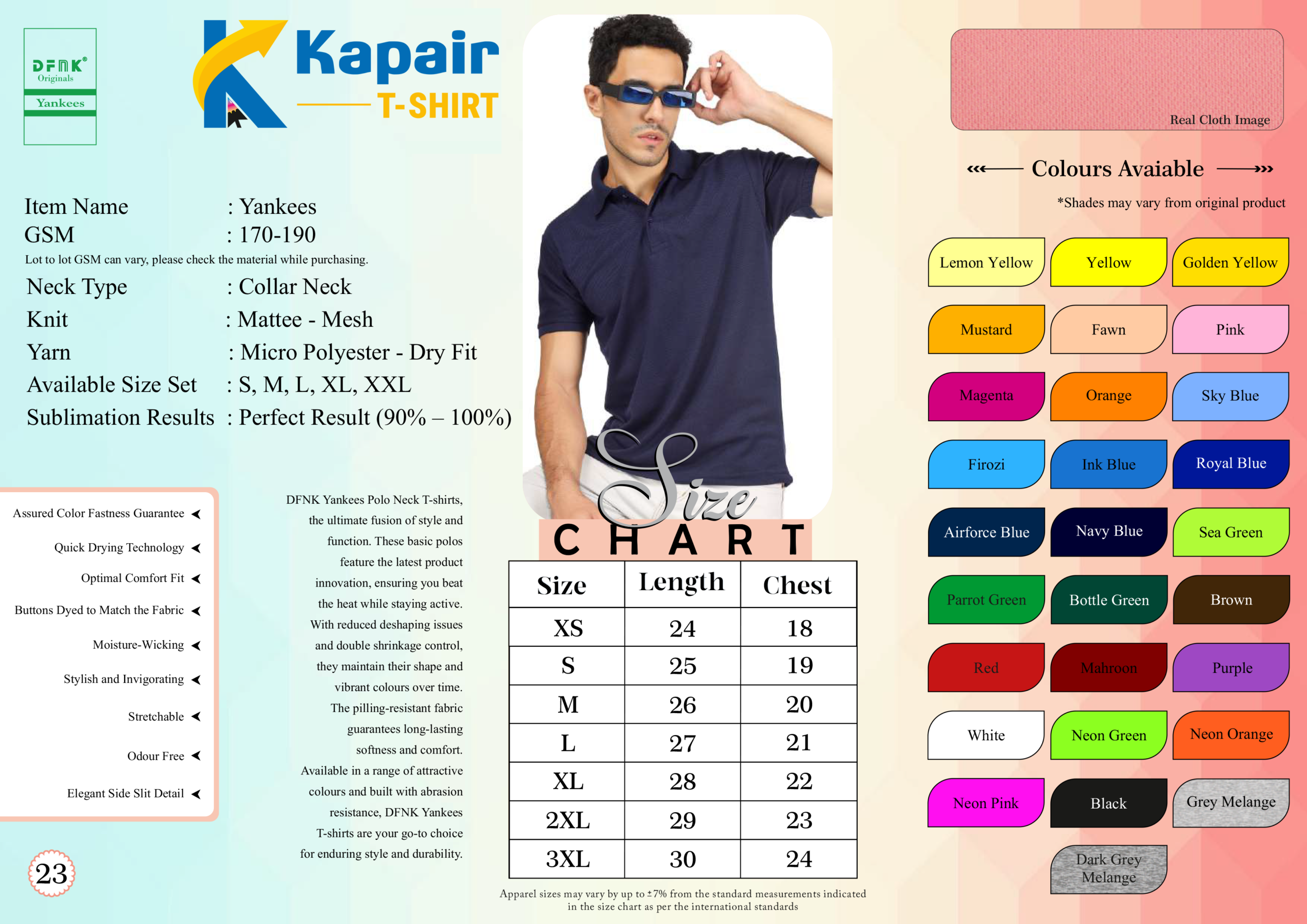
If you run a clothing store, e-commerce brand, or wholesale distribution business, finding a reliable bulk t-shirt manufacturer is one of the most important sourcing decisions you’ll make. Poor fabric quality, inconsistent sizing, missed deadlines, or unclear pricing can quietly erode your margins and your customers’ trust.
That’s where DFNK, manufactured and supplied through Kapair T-Shirt, comes in. DFNK has built its reputation as a B2B t-shirt manufacturer that retailers and wholesale buyers can depend on — combining consistent quality, competitive wholesale pricing, and manufacturing flexibility built specifically for bulk orders.
In this guide, we’ll break down exactly what makes DFNK a smart sourcing partner for retailers, how bulk ordering works, and what to look for when choosing a t-shirt manufacturing partner in 2026.
The Real Cost of Choosing the Wrong T-Shirt Manufacturer
Before comparing suppliers, it helps to understand what’s actually at stake for a retail or wholesale business:
- Inconsistent quality across production batches leads to returns and unhappy customers
- Unreliable lead times disrupt seasonal launches and inventory planning
- Poor fabric GSM (grams per square meter) results in thin, short-lived garments that damage brand reputation
- Hidden costs in shipping, printing, or minimum order quantities (MOQs) eat into retail margins
- Limited customization makes it harder to build a differentiated private label brand
A manufacturing partner should solve these problems — not create new ones. This is the standard DFNK is built around.
What Makes DFNK a Trusted Bulk T-Shirt Manufacturer
1. Consistent Fabric Quality at Scale
For retailers, quality consistency matters more than a single great sample. DFNK maintains standardized fabric sourcing — typically 100% combed cotton, cotton-poly blends, and premium GSM options — so that batch #1 and batch #50 feel and fit the same way. This consistency is critical for brands building repeat customer trust.
2. Flexible MOQs for Growing Businesses
Not every retailer can commit to massive first orders. DFNK offers tiered minimum order quantities designed to support:
- Small boutique retailers testing new designs or seasonal drops
- Mid-size wholesale buyers stocking multiple styles and colorways
- Large-scale distributors requiring high-volume, ongoing production
This flexibility allows businesses to scale their orders as demand grows, without being locked into unsustainable upfront volumes.
3. Private Labeling and Custom Branding
For retailers building their own apparel brand, private labeling is non-negotiable. DFNK supports:
- Custom neck labels and woven tags
- Branded packaging and hang tags
- Custom size charts and fit specifications
- Screen printing, DTG (direct-to-garment), and embroidery options
This means retailers can sell shirts as their own brand — not as a visibly white-labeled product — which is essential for long-term brand equity.
4. Competitive Wholesale Pricing Structure
Because DFNK manufactures at scale through Kapair T-Shirt’s production network, retailers benefit from pricing tiers that improve as order volume increases. Transparent per-unit pricing (rather than vague “contact for quote” pricing) makes it easier for buyers to calculate margins before committing.
5. Reliable Production and Delivery Timelines
For retail businesses, missing a seasonal launch window can mean lost revenue for an entire quarter. DFNK’s production planning is structured around clear timelines communicated upfront, so buyers can plan inventory, marketing, and launch dates with confidence.
How the Bulk Ordering Process Works with DFNK
If you’re new to sourcing through a manufacturer rather than a retail supplier, here’s a simplified overview of what to expect:
- Initial Consultation – Share your requirements: fabric type, GSM, colors, sizes, and estimated order volume.
- Sampling – Receive a sample garment to approve fit, fabric feel, and print/embroidery quality before bulk production.
- Quotation & MOQ Confirmation – Get transparent per-unit pricing based on your order volume and customization needs.
- Bulk Production – Once approved, your order moves into production with agreed timelines.
- Quality Check (QC) – Batches are checked for consistency in stitching, sizing, and print/embroidery placement.
- Packaging & Dispatch – Shirts are packed (with private label branding, if applicable) and shipped to your business or warehouse.
Working with a manufacturer that follows a clear, repeatable process — rather than an ad-hoc one — is often the biggest difference between a smooth wholesale partnership and a stressful one.
Fabric and Fit: What Retail Buyers Should Ask About
When evaluating any bulk t-shirt manufacturer, these are the technical details worth asking about directly:
- GSM (fabric weight): Lighter shirts (150–180 GSM) suit casual, budget-friendly lines; heavier shirts (200–240+ GSM) suit premium streetwear or workwear positioning.
- Fabric composition: 100% cotton, combed cotton, cotton-polyester blends, or performance fabrics each serve different retail categories.
- Shrinkage and colorfastness: Especially important for retailers selling online, where returns due to shrinkage or fading directly hurt margins.
- Sizing consistency: Ask for a size chart and, ideally, a pre-production sample in your most commonly ordered size.
A manufacturing partner that answers these questions clearly and proactively — rather than vaguely — is generally a strong signal of production maturity.
Who Should Consider DFNK for Bulk T-Shirt Sourcing?
DFNK, through Kapair T-Shirt, is well suited for:
- D2C apparel brands launching or scaling a private-label t-shirt line
- Retail stores and boutiques looking for a dependable wholesale supplier
- Corporate and promotional buyers needing bulk branded merchandise
- E-commerce sellers on marketplaces who need consistent stock without holding excessive inventory
- Event and institutional buyers (schools, gyms, organizations) needing uniform-style bulk orders
Frequently Asked Questions
What is the minimum order quantity (MOQ) for bulk t-shirts from DFNK? MOQs vary based on customization level (blank vs. private label vs. custom print/embroidery) and fabric choice. Smaller retailers can typically start with lower-volume tiers, while distributors can negotiate high-volume pricing.
Can DFNK produce private label t-shirts with my own brand tags? Yes. Private labeling — including custom neck labels, hang tags, and packaging — is a core part of DFNK’s B2B manufacturing offering for retailers building their own brand.
How long does bulk production typically take? Timelines depend on order volume and customization complexity, but production schedules are communicated upfront during the quotation stage so retailers can plan launches accordingly.
Does DFNK offer fabric samples before bulk production? Yes. Sampling is a standard step in the process, allowing buyers to approve fabric quality, fit, and printing/embroidery before committing to a full production run.
Final Thoughts: Building a Reliable Supply Chain Starts with the Right Manufacturer
For retailers and wholesale buyers, a t-shirt manufacturing partner isn’t just a vendor — it’s an extension of your brand’s quality and reliability. DFNK’s approach through Kapair T-Shirt focuses on the three things B2B buyers care about most: consistent quality, transparent pricing, and dependable production timelines.
Whether you’re a boutique retailer placing your first bulk order or a distributor scaling an existing product line, a structured, private-label-friendly manufacturing partner can make sourcing predictable instead of stressful.
Ready to discuss your bulk order requirements? Reach out to the Kapair T-Shirt team to request a quote, sample, or MOQ breakdown tailored to your business.
- Call/WhatsApp: +91 87000 75486 | +91 85955 75559
- Location: Delhi (Serving Ghaziabad, Noida, Gurgaon & Pan-India)
- Google Rating: 4.9 Stars

