



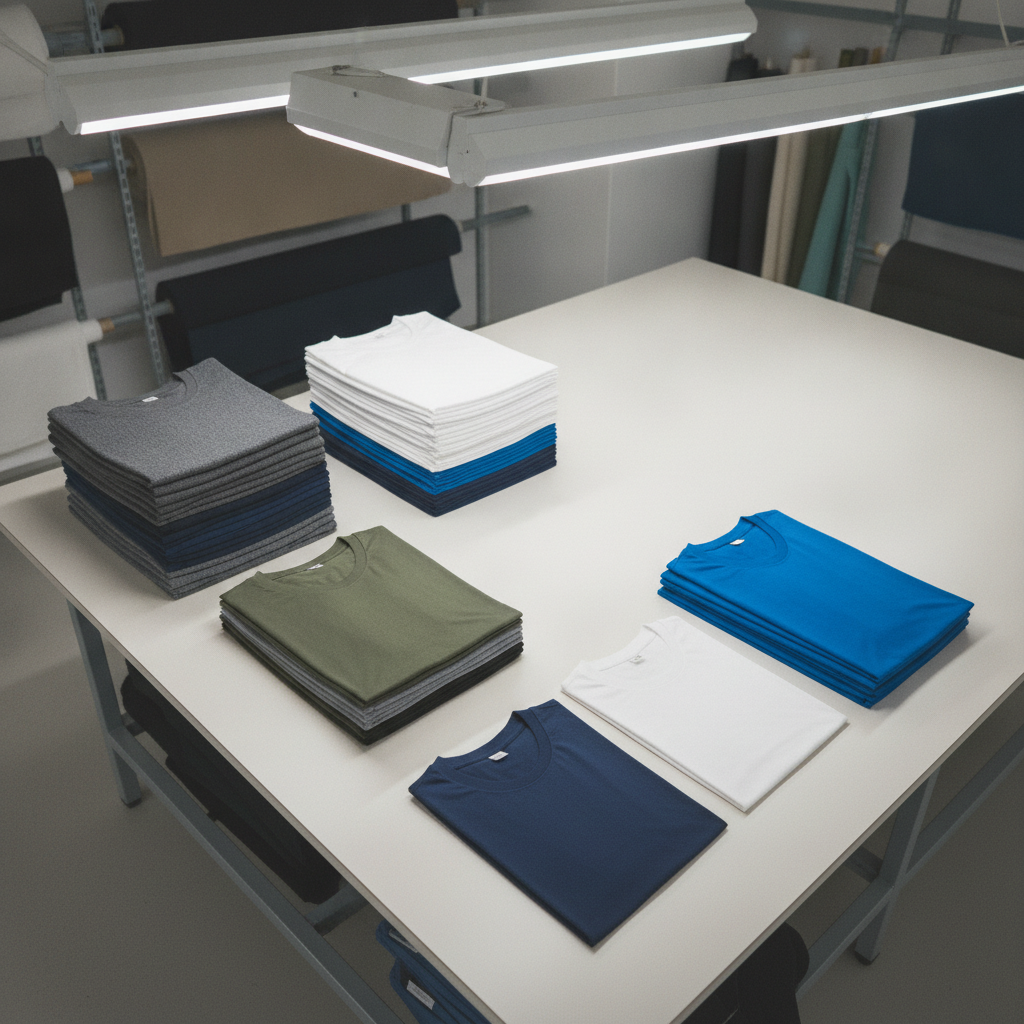
The best fabric for corporate T-shirts balances comfort, durability, and brand-ready print clarity. For most teams, a ring-spun CVC 60/40 (cotton/poly) jersey is the best fabric for corporate t-shirts because it combines a soft handfeel, reduced shrinkage, and excellent logo results across screen printing, DTF, and embroidery methods.
By Dev Kapair • Last updated: 2026-06-29
Quick Summary
Choose fabrics that stay comfortable through long shifts, keep logos sharp after many washes, and work with multiple print methods. Our top pick is ring-spun CVC 60/40 for its balance of softness, colorfastness, and durability. See the comparison table for a fast scan of breathability, print fit, and ideal use.
Corporate apparel should look sharp on day 1 and day 100. We curate seven fabric types that hold logos, breathe well, and survive frequent laundering. You’ll also find a buying checklist, testing tips, and how Kapair’s in-house screen printing, DTF, sublimation, and embroidery line up with each fabric.
- Top pick for most brands: ring-spun CVC 60/40 jersey
- Best for all-weather uniforms: performance polyester knits
- Premium handfeel: combed ring-spun cotton and tri-blend
- Smart choice for polos: piqué knits that resist twisting
- Eco-forward options: organic cotton and recycled polyester
Quick Comparison Table
Scan this table to match fabric to use-case, breathability, and print fit. CVC blends and combed cottons fit most offices and events. Performance polyester wins for sweat management. Piqué polos elevate client-facing teams. Use this as your short list before sampling.
| Fabric | Feel | Breathability | Moisture/Wicking | Best Print Methods | Durability | Shrink/Wrinkle | Ideal Use |
|---|---|---|---|---|---|---|---|
| CVC 60/40 (ring-spun) | Soft, smooth | High | Moderate | Screen, DTF, Embroidery | High | Low shrink, low wrinkle | General corporate tees, events |
| Combed ring-spun cotton | Premium soft | High | Moderate | Screen, DTF, Embroidery | Medium-High | Some shrink, low wrinkle | Brand launches, giveaways |
| Polyester performance knit | Light, technical | Medium | High | DTF, Sublimation | High | No shrink, low wrinkle | Field teams, sports days |
| Tri-blend (cotton/poly/rayon) | Ultra-soft, drapey | High | Moderate | DTF, Screen (light inks) | Medium | Low shrink, very low wrinkle | Premium swag, creative teams |
| Piqué polo knit | Structured, classic | Medium-High | Moderate | Embroidery, DTF | High | Low shrink, holds shape | Polos for sales/client teams |
| Organic cotton jersey | Soft, natural | High | Moderate | Screen, DTF, Embroidery | Medium-High | Some shrink, low wrinkle | Sustainability initiatives |
| Recycled polyester (rPET) | Smooth, technical | Medium | High | DTF, Sublimation | High | No shrink, low wrinkle | Eco-forward uniforms |

Our Top Pick: Ring-Spun CVC 60/40
If you want one fabric that works across offices, events, and uniforms, choose ring-spun CVC 60/40. It blends cotton comfort with polyester stability, resists shrinkage, and keeps logos crisp with screen printing, DTF, and embroidery—ideal for large rollouts and repeat orders.
Why this matters: consistency across departments. Cotton-rich blends feel natural and breathe; polyester adds strength, color retention, and faster dry times. In our experience managing corporate T-shirt rollouts, CVC tees maintain fit and color through repeated washing while staying print-friendly for reorder consistency.
- Comfort + stability: The 60/40 ratio balances softness and shape retention for daily wear.
- Print versatility: Works great with screen printing for corporate T-shirts, DTF logos, and branding variations.
- Lower maintenance: Fewer sizing surprises on reorders thanks to reduced shrink and wrinkle.
- Team-ready palette: Blends take rich solids well, supporting brand color accuracy across sizes.
Common use cases include company-wide tees, conference giveaways, and volunteer programs. For polos, shift to a piqué knit with a similar cotton-poly balance for extra structure and embroidery definition.
The Rest: 6 More Excellent Choices
Beyond CVC, combed ring-spun cotton, performance polyester, tri-blend, piqué polo knits, organic cotton, and recycled polyester each win specific scenarios. Match the fabric to how your team works—desk, field, or event floor—and the decoration method you’ll use most.
2) Combed Ring-Spun Cotton Jersey
Combed ring-spun cotton elevates the classic tee with finer yarns and a smoother surface. That tighter, cleaner yarn profile helps ink sit evenly for crisp edges and rich colors. Teams notice the handfeel immediately—soft, breathable, and familiar—great for morale and brand perception.
- Why choose it: Premium handfeel, strong breathability, and excellent screen and DTF results.
- When it shines: Brand launches, customer swag, culture tees, and creative teams wanting a refined drape.
- Things to plan for: Pre-shrunk construction reduces surprises. Always test with your darkest brand color.
- Kapair fit: We pair it with high-coverage screen prints for saturated logos without a heavy hand.
Action tip: request a sample in your brand color and run a quick wash trial. Check any tonal shift between collar and body to verify dye uniformity before green-lighting a bulk order.
3) Polyester Performance (Microfiber/Dri-Fit)
Performance polyester is purpose-built for moisture transport and quick dry. Knit structures and yarn profiles push perspiration outward so surfaces feel drier during activity. That makes it a staple for field teams, outdoor events, and summer programs where comfort and presentation must live together.
- Why choose it: Technical wicking and fast dry for long shifts or heat-prone venues.
- Decoration: DTF transfers on Dri-Fit uniforms hold up well; sublimation creates vibrant, permanent color on light bases.
- Plan for: Avoid heavy-coverage prints that block breathability. Use lighter graphics for airflow.
- Technical note: See this polyester POY overview and polyester DTY overview for yarn forms common in performance knits.
Action tip: if your team rotates indoors and outdoors, blend performance tees with cotton-rich options so everyone gets the right garment for the shift.
4) Tri-Blend (Cotton/Poly/Rayon)
Tri-blend brings the “favorite T-shirt” softness on day one. The rayon component adds drape and a slightly heathered surface. That texture is stylish but can mute ink colors slightly—use contrast-forward art and consider DTF for clean edges without over-inking.
- Why choose it: Premium comfort with modern drape and reduced wrinkling for travel days.
- Decoration: DTF and soft-hand screen prints; limit ink layers on lightweight fabric.
- Plan for: Slightly vintage look; confirm Pantone matches on heathers before approval.
- Kapair fit: Great for creative teams and brand ambassadors who value all-day softness.
Action tip: when outfitting a multi-day event staff, rotate tri-blends with CVC tees so comfort remains high while keeping color saturation consistent.
5) Piqué Polo Knit (Cotton or Cotton-Poly)
Piqué is the go-to knit for polos. Its textured, waffle-like surface resists curling at collars and hems and keeps a smart silhouette through the workweek. The structure also takes embroidery neatly, holding stitches without tunneling or puckering.
- Why choose it: Professional look with better shape retention than jersey knits.
- Decoration: Embroidery for polished logos; DTF for small, precise graphics.
- Plan for: Select a stitch count suitable for the knit density to avoid distortion.
- Kapair fit: See our corporate polo T-shirts supplier pages for knit and collar options.
Action tip: keep left-chest logos within a modest size so the knit texture doesn’t compete with fine detail. A satin stitch outline can sharpen edges on textured grounds.
6) Organic Cotton Jersey
Organic cotton offers the natural comfort of cotton with more transparent sourcing. Many sustainability programs now request it for employee apparel and event tees. The surface is print-friendly and familiar, making it a simple swap when your policy or CSR goals move in that direction.
- Why choose it: Aligns with sustainability goals while preserving breathability and comfort.
- Decoration: Works with screen printing, DTF, and embroidery.
- Plan for: Sample darker shades to validate colorfastness and handfeel after print.
- Kapair fit: We spec organic blends on culture tees and HR programs where values messaging matters.
Action tip: pair organic bases with water-based inks for a softer print and a cleaner narrative in internal comms.
7) Recycled Polyester (rPET)
Recycled polyester (often from post-consumer bottles) delivers durability and moisture control similar to virgin polyester with a lower raw-material footprint. The yarns accept DTF and sublimation well, and garments resist wrinkles—useful for teams that travel or work in variable climates.
- Why choose it: Eco-forward uniforms that still perform in the field.
- Decoration: DTF for dark bases; sublimation for light grounds with edge-to-edge graphics.
- Plan for: Confirm fabric smoothness if you need ultra-fine embroidery; some knits favor prints.
- Reference: Technical profiles like polyester FDY help explain filament options you’ll encounter in specs.
Action tip: include a small inside-neck note on recycled content in your garment spec to support sustainability reporting.
Free fabric consult: Unsure which knit fits your team? Our specialists will match fabric, weight, and decoration to your use case and timeline. Start with our corporate T-shirt printing guide and request samples.
How to Choose the Right Fabric for Your Corporate Tees
Decide by use-case, climate, and logo method. Desk teams want soft, breathable knits like CVC or combed cotton. Field teams benefit from performance polyester. Map logos to screen, DTF, sublimation, or embroidery, then request pre-production samples to validate handfeel and color.
Here’s a simple flow that mirrors our day-to-day consulting for corporate, HR, and event buyers. It keeps decisions practical, testable, and consistent across repeat orders.
- Define the workday: Desk, retail floor, or outdoor duty? Pick breathability and wicking accordingly.
- Select the knit structure: Jersey for tees, piqué for polos, performance mesh for high activity.
- Match decoration:
- Screen printing for bold, solid logos on cotton and CVC.
- DTF for detailed art and gradients across most fabrics.
- Sublimation for permanent color on light polyester.
- Embroidery for polos, left-chest marks, and heritage branding.
- Specify weight: Midweight tees feel substantial without heat buildup; polos prefer medium gauges for structure.
- Test + approve: Get a physical sample. Wash once, wear once, and inspect seams, logos, and drape.
Transition tip: after a pilot batch, lock approved specs (fabric, weight, Pantones, placement) so reorders match without surprises.
Buying Guide: From Brief to Boxed Tees
A reliable buying process minimizes surprises. Share your use-case, brand colors, and delivery window; then confirm fabric, knit, weight, and logo method with samples. Lock specs and proceed to bulk. This approach protects fit, color, and logo quality at scale.
At Kapair T-Shirt, we run an end-to-end workflow that keeps corporate apparel predictable even under tight timelines. Here’s how to move from idea to uniforms efficiently.
- Kickoff brief: Team count, sizes, climate, dress code, and branding rules.
- Fabric short list: Usually two options (e.g., CVC and tri-blend) to compare handfeel and print look.
- Decoration alignment: We’ll recommend screen, DTF, sublimation, or embroidery per art and fabric.
- Sampling: Fit confirmation plus a logo strike-off to validate color, edge sharpness, and hand.
- Spec lock: Fabric type, knit, color codes, placements, size curve, and packaging.
- Production: In-house printing/embroidery lines for consistent outcomes across sizes.
- Logistics: Packed by size sets for easy distribution to departments.
For polos specifically, browse our custom wholesale polos or corporate polo T-shirts supplier pages to compare collars, cuffs, and piqué densities.
Pricing Factors (Without Numbers)
Budget depends on fabric type, weight, knit complexity, and logo method—not just quantity. Standardize specs early, reduce artwork revisions, and use efficient placements to keep value high without compromising quality or brand impact.
While we never quote pricing in articles, we can outline what typically drives value. Understanding these levers helps procurement plan realistic timelines and select the right mix of fabrics and decoration.
- Fabric + weight: Cotton-rich vs. performance synthetics; lightweight vs. midweight.
- Knit structure: Jersey is efficient; piqué and meshes add complexity.
- Decoration method: Screen, DTF, sublimation, and embroidery differ in setup and throughput.
- Artwork density: Large, high-coverage graphics increase ink thread count and handling time.
- Colorways + sizes: More variants require additional changeovers and QC steps.
- Packaging + kitting: Department-wise packing and labeling streamline distribution but add steps.
Next step: align your spec with our bulk order planning guide so operations run smoothly from purchase order to delivery.
Frequently Asked Questions
Here are quick answers to the fabric questions corporate buyers ask most—focused on breathability, branding, and day-to-day care. Use these to finalize your short list, then request samples to confirm handfeel and logo performance.
What fabric holds screen prints best for corporate tees?
Cotton and cotton-rich CVC blends hold screen inks reliably and show solid, saturated colors. Use midweight jerseys for balance, and choose soft-hand inks if you want a lighter feel. Always run a strike-off in your brand color before bulk production to verify match and edge crispness.
Is polyester better for hot, active roles?
Yes. Performance polyester transports perspiration away from skin and dries quickly, keeping teams looking presentable during long shifts. Pair it with lighter, breathable graphics to preserve airflow. For light bases, sublimation yields permanent color that won’t crack or peel.
Which fabric is best for embroidered logos?
Piqué polo knits and stable cotton-poly jerseys are ideal for embroidery. They hold stitches neatly and resist puckering. Keep left-chest logos modest in size, and work with your decorator to match stitch count and backing to the knit density for clean edges.
What’s the safest one-fabric choice for a company-wide rollout?
Ring-spun CVC 60/40 is the safest all-rounder. It balances breathability and stability, resists shrinkage, and works with screen printing, DTF, and embroidery. That versatility keeps color, fit, and logo quality consistent across departments and reorders.
How do I minimize color mismatch across sizes and reorders?
Lock Pantone codes, approve a pre-production sample, and keep fabric and decoration methods consistent. Document placements and size curves in the spec. The fewer variables you change, the closer your reorders will match the original rollout.
Methodology: How We Evaluated These Fabrics
We combined factory-floor experience with buyer priorities: comfort, breathability, logo quality, laundering resilience, and re-order predictability. We then mapped each fabric to real decoration methods and common corporate scenarios to surface clear, low-risk picks.
Our team outfits corporate, HR, and event programs across sectors. We evaluate fabrics for breathability during a normal workday, logo edge sharpness with standard screen and DTF settings, and garment stability after typical laundering. Then we compare against supply availability to ensure reorders land on time.
- Comfort and breathability during an 8–10 hour wear window.
- Logo clarity and color saturation with screen, DTF, sublimation, and embroidery.
- Garment stability: checking for shrink, twist, and pilling after washing.
- Supply predictability for rollouts and long-term programs.
We also align recommendations to Kapair’s in-house capabilities—printing, DTF transfers, sublimation, and embroidery—so execution is consistent from sample to bulk.
Conclusion: Pick Once, Reorder Forever
Start with ring-spun CVC 60/40 for universal wear, then add performance polyester for active roles and piqué polos for client-facing teams. Approve samples, lock specs, and you’ll enjoy consistent color, fit, and logo quality across every reorder.
- Key takeaways: CVC 60/40 is the most versatile base for corporate tees.
- Use performance polyester where moisture management matters.
- Choose piqué polos and embroidery for a polished, professional look.
- Sample first, then standardize specs to keep reorders identical.
Ready to spec your rollout? Explore our corporate T-shirt printing options and bulk order planning guide. Our team will help you match fabric, knit, and decoration to your brand’s daily reality.

