




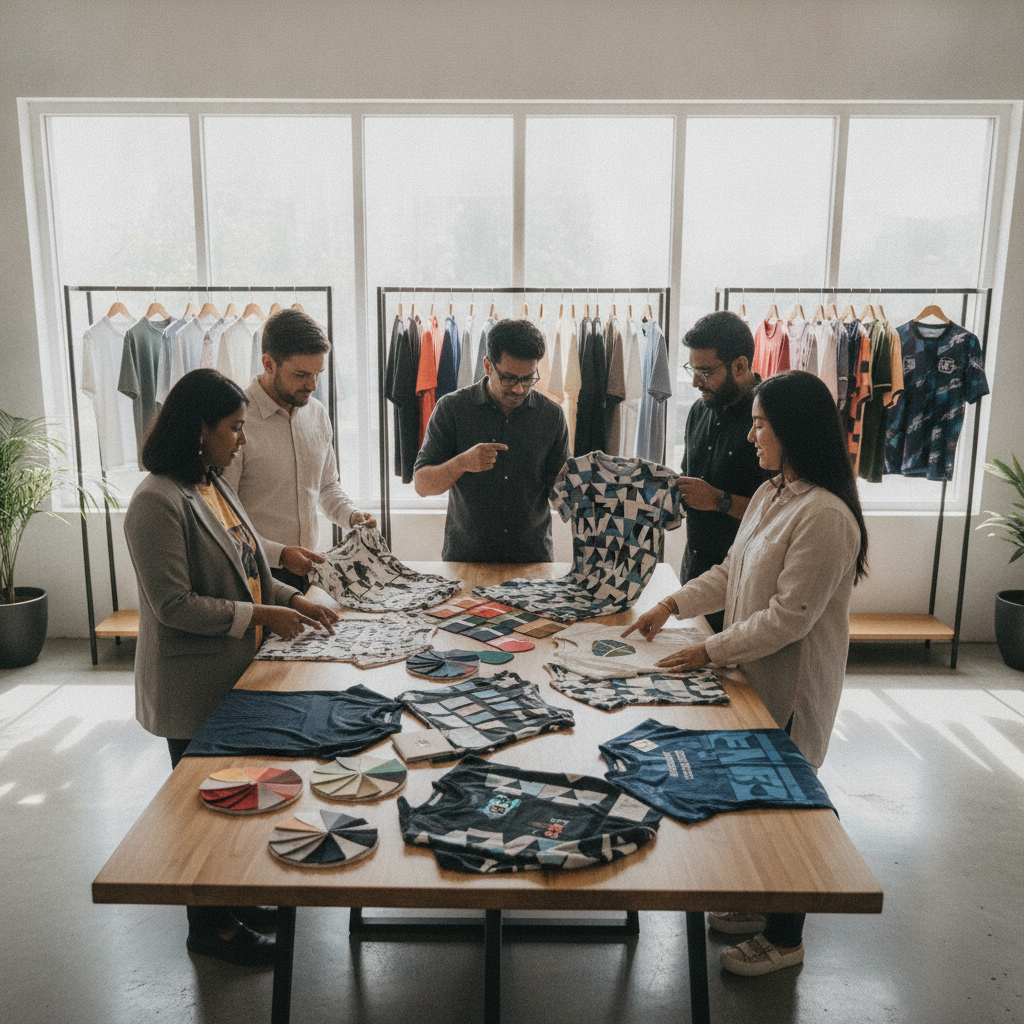
Small batch custom t-shirts for startups are limited-run branded tees produced in quantities sized for early teams, pilots, and events. In New Delhi, they let founders validate designs, control cash flow, and move fast while keeping quality high. Kapair T-Shirt handles design proofing, print method selection, sampling, and quick fulfillment end-to-end.
By Dev Kapair • Last updated: 2026-06-28
Above-Fold: Hook, Promise, and What You’ll Learn
Use small-batch tees to launch fast, learn faster, and scale with confidence. This guide shows founders how to plan quantities, choose print methods, proof designs, and ship reliably—leveraging Kapair T-Shirt’s end-to-end workflow in New Delhi for agile, high-quality brand apparel.
Here’s the play: lock brand consistency early, limit inventory risk, and ship on time. We’ll keep it practical and founder-friendly.
- What “small batch” really means for startups
- When to pick DTF, screen, sublimation, or embroidery
- How sampling, QA, and logistics compress timelines
- How to brief your vendor and avoid do-overs
- Real New Delhi examples you can model this week
Quick Summary
Small-batch tees de-risk branding for new teams by matching quantities to milestones. Pair smart MOQs, rapid sampling, and the right print method to get durable, on-brand apparel in days—not months—while preserving cash and learning from real wear.
Think of small-batch apparel as an agile sprint: tight scope, rapid feedback, and a clear definition of done. With Kapair T-Shirt’s consultative approach, you can move from idea to wearable proof in a short, predictable cycle.
What Are Small-Batch Custom T-Shirts for Startups?
Small-batch tees are limited production runs—often tens, not hundreds—optimized for early teams, pilot campaigns, and events. They protect cash, reduce storage, and help you iterate on design, fit, and fabric before you commit to scale.
“Small batch” isn’t a fixed number; it’s a fit-for-purpose quantity aligned with your next milestone. In practice, many founders start with sizes for the core team and a buffer for hiring or events. Typical fabric weights range from 160–220 GSM for tees, supporting comfort and print durability.
- Purpose-first quantities: Size runs that match team headcount, event RSVPs, or pilot demand.
- Fast learning cycles: Quick design feedback from real wear and wash tests.
- Scalable foundation: Patterns, placements, and fabrics validated for future bulk.
For founders, the magic is compounding: each small batch sharpens branding, informs future budgets, and builds a repeatable spec sheet for scale.
Why Small Batch Matters for Lean Teams
Small batches convert branding from a big bet into a series of safe, testable steps. You capture real-world feedback, fix issues early, and keep momentum—without tying up working capital in boxes you might not wear.
Early-stage teams change fast—logos tweak, palettes evolve, headcount shifts. A tight, well-made run allows brand learning without waste. Many startup apparel projects see 1–2 design adjustments after the first wear-test; baking that into your plan avoids delays later.
- Risk control: Fewer units mean lower exposure if a design or fit needs revision.
- Speed to impact: Rapid sampling (often within a few business days) gets shirts on people sooner.
- Quality signals: Durable prints and consistent sizing project credibility to customers and hires.
- Operational clarity: Each run improves your spec: Pantone, placements, fabric, and packaging.
In our experience with New Delhi startups, the first 20–50 shirts often surface the tiny details that matter—neck label comfort, sleeve length, or color tolerance under office lighting. Those learnings compound into smoother bulk orders later.
How Small-Batch Production Works at Kapair T-Shirt
We guide you from brief to box: consult on fabrics, match the best print or embroidery method, create a digital proof, sample fast, and produce a tight run with quality checks—then pack and dispatch on a reliable timeline.
Kapair T-Shirt is set up for end-to-end execution, tailored to B2B needs in New Delhi. Here’s how we compress time while keeping standards high:
Our standard small-batch workflow
- Discovery & brief: Use cases (onboarding, event, sales), brand files, and quantity by size. Clarify wear context—office AC vs. outdoor heat.
- Fabric & fit selection: Choose between polo or round-neck; pick weights and blends based on comfort and print durability.
- Decoration method match: DTF for multi-color art, screen for solid spot colors, sublimation for poly jerseys, embroidery for premium identity marks.
- Design proofing: Mockups with measured placements (e.g., 3.5–4 in chest logo), Pantone notes, and label decisions.
- Sampling: A pre-production sample validates color, scale, and handfeel under real lighting.
- Production & QA: Batch routing, print checks, thread trims, and size verification.
- Packing & dispatch: Size-wise folding, eco packaging on request, and labeled cartons for fast distribution.
This sequence creates auditability. Each step documents a choice that becomes part of your brand’s apparel spec, smoothing the jump to bulk when you’re ready.
DTF, Screen, Sublimation, or Embroidery—Which Should You Choose?
Choose methods by fabric, artwork, and use case: DTF for complex, full-color art; screen for bold spot colors and large runs; sublimation for polyester sportswear; embroidery for premium, textured logos on polos and jackets.
Matching method to the brief is half the battle. The right choice improves comfort, color fidelity, and longevity. Here’s a quick comparison to help you decide.
| Method | Best For | Color Range | Fine Detail | Durability | Handfeel | Ideal Batch Size |
|---|---|---|---|---|---|---|
| DTF (Direct-to-Film) | Full-color logos, gradients, photos | Unlimited | High | High (wash-resistant) | Soft, thin film | Small to medium |
| Screen Printing | Solid spot colors, bold graphics | Up to 8–10 common | Medium–High | Very high | Ink sits on fabric | Medium to large |
| Sublimation | Polyester sports jerseys | Unlimited | High | Very high (dye bonds) | No feel (dyed-in) | Small to large |
| Embroidery | Premium polos, jackets, caps | Thread palette | Medium | Very high | Textured, elevated | Small to large |
Want a deeper dive into production choices? See our custom manufacturing guide for a fuller walkthrough of fabrics, finishes, and checkpoints we use with corporate teams.

When each method wins
- DTF: Launch graphics with gradients or tiny type; balanced for quick-turn small runs.
- Screen: Two-color brand tees for field teams; unbeatable ink durability on cotton.
- Sublimation: Numbered polyester jerseys for sports or hackathons; zero handfeel.
- Embroidery: Polo shirts for leadership or client-facing roles; premium texture, long wear.
Choosing right also protects comfort. For example, large solid blocks on hot days feel better in screen ink than heavy film; small chest badges shine in embroidery without adding weight.
Design, Proofing, and Brand Consistency
Lock brand integrity with precise placements, Pantone notes, and sample sign-off. A measurable proof plus a physical sample eliminates guesswork and prevents rework at production scale.
We treat apparel like any other brand asset. That means measurable specs and controlled review cycles. Most early teams gain confidence by approving a single “golden sample” under office lighting and daylight, then using it as the reference for future runs.
- Logo placement: Chest (3.5–4 in wide), sleeve badges, or back prints—measured from collar/side seams.
- Color control: Pantone callouts and tolerance notes; confirm on fabric, not just screens.
- Typography: Minimum type heights for readability in embroidery or small transfers.
- Labeling: Printed care labels or woven tags; choose comfort-first for daily wear.
For context on garment types, compare choices in our polo versus round-neck guide. Polo collars read executive; round necks are casual and event-friendly.
Fit, Fabric, and Wearability for Real-World Use
Prioritize comfort, breathability, and consistent sizing. Specify GSM, blends, and pattern details up front so your tees feel great in the office, on-site, or outdoors—and look the same across sizes.
Wearability isn’t just fabric—it’s pattern, stitching, and finishing too. For most New Delhi teams, light-to-midweight cotton blends perform well across air-conditioned offices and warm commutes. For heavy outdoor use, moisture-wicking options reduce sweat marks and dry quicker.
- Fabric selection: 100% cotton for softness; poly-cotton blends for shape retention; performance poly for sports.
- Pattern specs: Shoulder seams, ribbed collars, and sleeve length tuned to common sizes.
- Finish: Pre-shrunk fabrics and stable dyes help maintain fit and color after repeated washes.
A straightforward way to test: wear sample tees for 3–5 workdays, laundering between uses. Note collar roll, color stability, and print integrity; those observations guide the next batch.
Tools and Resources Founders Actually Use
Use simple, proven tools: a mockup deck for approvals, size runs for try-ons, and a shared spec sheet. For ecom pilots, established platforms make print-on-demand tests easy before moving to in-house production.
For founders exploring a pre-launch store or a pilot drop, reference materials from established platforms can help you decide when to test ecom vs. order internally. For example, Shopify’s t‑shirt POD overview outlines validation paths without inventory, and its broader print‑on‑demand clothing guide explains fulfillment trade-offs. If you’re comparing stitch quality and brand feel, their embroidery primer gives a quick sense of what textured logos signal to customers.
- Spec sheet template: SKU, fabric/GSM, placements, Pantone, method, QA checklist, and packing notes.
- Size run try-on: Order a minimal spread to confirm pattern fit before green-lighting production.
- Shared mockups: Stakeholders comment once; production follows the approved PDF.
Once you’re ready to build stock for teams, moving from POD tests to a managed small batch with Kapair T-Shirt consolidates quality control and timelines under one roof.
13 Mini Case Studies and Examples You Can Copy
Here are compact, real-world scenarios showing how startups use small-batch apparel to ship fast, learn from wear, and set specs for future scale—using Kapair T-Shirt’s services across tees, polos, hoodies, and uniforms.
We anonymized details but kept the operational truth. Use these as starting patterns.
- Founding team identity: 24 round-neck tees in brand black, DTF chest logo + sleeve tagline; approved sample in two days; shipped before a product demo.
- Sales pilot polos: 18 polos with embroidered left-chest logo; consistent collar shape after multiple washes validated the pattern for the next wave.
- Hackathon tees: 40 poly tees printed via sublimation for all-over graphics; numbered for teams; breathable fabric stayed cool in long sessions.
- Onboarding kit: Small runs of tees + caps; DTF badges on caps matched tee colors; packaged per new-hire box.
- Ops field wear: Round-necks with large back print for on-site visibility; screen-printed to keep large art breathable.
- Investor day: Premium polos with tonal embroidery; subtle but elevated; leaders stood out without loud graphics.
- Partner swag drop: 30 tees shipped to agencies; zip-packed with size labels; included printed care instructions.
- Internal club jerseys: Polyester sportswear via sublimation; colors stayed bright after repeated sweat cycles.
- Support team uniforms: Coordinated tees + wind jackets; embroidery on jackets, DTF on tees; consistent Pantone across textiles.
- Conference promo: Quick-turn tees for a booth team; pre-booked slot on our press line ensured on-time handover.
- Limited drop test: Ecom teaser with 25 tees; POD validated demand; moved to managed batches for steadier quality.
- CSR event: Color-coded tees per volunteer role; easy on-ground coordination; screen ink held up through outdoor heat.
- Office uniform refresh: Polo + formal shirt combo for client meetings; embroidery thread matched stationery palette.
Want uniforms that signal credibility? See how we structure them in our corporate uniforms explainer.
Logistics, Timelines, and Packaging That Scale
Plan backwards from your event or onboarding date. Lock proofs early, approve samples quickly, and confirm size splits. Clear cartons, labeled by department or location, keep distribution painless.
Reliable timelines come from decisive approvals and clean inputs. Many small-batch projects move from proof to shipment within a short cycle when art is final and sizes are confirmed. Pre-booking a press slot, especially around local holidays, keeps commitments dependable.
- Timeline anchors: Proof approval, sample sign-off, and final quantity lock each trigger downstream steps.
- Packing clarity: Size-wise folding and carton labels make office distribution fast.
- Care instructions: Simple wash cards reduce shrinkage, fading, and returns.
Local considerations for New Delhi
- Plan production around city-wide holidays and peak event seasons; pre-booking avoids press bottlenecks.
- Choose breathable fabrics for warm commutes; keep a few layers (hoodies or wind jackets) for AC-heavy offices.
- Allow extra buffer during monsoon for intercity courier legs; we’ll advise best routing for your addresses.
Quantity Planning, MOQs, and Size Splits
Match quantity to the milestone: cover today’s team, plus a smart buffer for hires and spares. Use a simple size curve based on past apparel or try-on feedback to reduce exchanges.
MOQs exist for a reason—setup, calibration, and routing. But small batches can still be lean. Many startup orders begin with tens of pieces spread across sizes, then reorder with refined splits based on actual wear. A clear size curve reduces leftover stock and ensures everyone gets a great fit.
- Size curve basics: Center your distribution around the most common sizes; test with a quick try-on.
- Buffer logic: Add a small percentage for new hires, losses, and event surprises.
- Reorder cadence: Document the spec and place repeat orders as your team grows.
For planning the jump to large runs later, our bulk order planning article outlines how size curves, cartons, and QA scale smoothly.
Quality Assurance and Wash Testing
Treat QA like product QA: measure, test, and document. A short wear-and-wash cycle validates print integrity, color fastness, shrinkage, and stitching before you approve the full batch.
Quality is a stack: inputs, process, and checks. We verify measurements, print placement, and thread trims; then we test wash durability on samples. These steps prevent avoidable issues and provide a record you can reuse for later orders.
- Measurement checks: Garment specs across sizes to keep fit consistent.
- Print checks: Edge clarity, color fidelity, and surface feel after wash.
- Stitch integrity: Seams, hems, and collars inspected for daily wear.
Looking ahead to enterprise scale? Our bulk manufacturing overview shows how these checks intensify for large deployments without slowing timelines.
What Influences Your Quote (No Pricing, Just Factors)
Quotes reflect fabric and garment type, print or embroidery method, number of placements, color complexity, and finishing/packing requirements. Clear briefs reduce revisions and keep timelines tight.
We never share pricing in content, because every spec is unique. Instead, align on decision levers up front so your quote reflects exactly what you need—nothing more, nothing less.
- Garment selection: Polo vs. round-neck; fabric/GSM, blend, and pattern.
- Decoration: Method, color count, print areas, and embroidery stitches.
- Complexity: Multiple placements, individual names/numbers, or special labels.
- Finishing: Folding style, poly-bags vs. eco options, and carton labeling.
When you’re ready to think about planning levers, see the considerations in our bulk printing factors guide—it focuses on variables, not numbers.
Beyond Tees: Polos, Hoodies, Wind Jackets, and Uniforms
Build a flexible kit. Pair round-neck tees for events with embroidered polos for meetings, add hoodies for AC-heavy offices, and wind jackets for field teams—keeping colors and materials consistent.
Startups don’t need everything at once. Extend thoughtfully when the use case appears. Keep your palette and placements consistent so the whole set reads as one brand system.
- Polos: Embroidered chest marks for premium moments and leadership visibility.
- Hoodies: DTF or screen for bold art; great for winter and cool offices.
- Wind jackets: Embroidery holds up to abrasion; ideal for site visits.
- Uniforms: Coordinated fits for front-of-house or support teams.
For a deeper comparison of garment types, explore our polo vs. tee primer, then browse our custom tees for small businesses to see how kits evolve.
Free consult for New Delhi startups: Share your logo files and use case. We’ll recommend fabric, method, placements, and a sample plan so you can ship with confidence.
How to Brief Your Vendor for a Clean First Pass
Great briefs save days. Provide vector logos, Pantone codes, exact placements, size splits, deadlines, and packing preferences. Ask for one digital proof and one physical sample before production.
When inputs are crisp, outputs are predictable. That’s the rule. A single-source spec (PDF) and a named approver keep the review loop short and decisive.
- Files: Vector logos (AI, EPS, or PDF), web-safe backups (PNG/SVG), and font info if needed.
- Placements: Measured from seams/collar; include scale in inches.
- Color: Pantone callouts with tolerance; reference on fabric swatches.
- Deadlines: Event or onboarding dates with buffer.
- Packing: Size-wise folding, label preferences, and carton notes.
New to startup apparel? Our startup printing explainer walks through a founder-friendly checklist you can reuse.
Frequently Asked Questions
These concise answers help founders make fast, confident decisions about small-batch startup apparel—without diving through forums or guesswork.
What counts as a “small batch” for startup tees?
There’s no universal number. For early teams, tens of pieces across a few sizes is common. Start with a practical size curve, then reorder with refined splits after a brief wear-and-wash test.
Which print method is best for complex logos?
DTF handles gradients, tiny type, and multi-color art well in small runs. For bold spot colors and heavy daily wear, screen printing is a classic choice. Embroidery adds texture for polos and jackets.
How do we keep colors consistent across reorders?
Document Pantone values, placements, and fabric notes in a single spec sheet. Approve a “golden sample,” then reference it for all future runs. Consistency starts with accurate proofs and keeps QA simple.
What’s the fastest way to go from logo to wearable tees?
Provide vector files, size splits, and your deadline up front. Approve a digital proof the same day, then green-light a physical sample. Clean inputs and quick approvals compress timelines dramatically.
Conclusion and Next Steps
Small-batch custom t-shirts for startups turn apparel into an agile branding loop. Decide fast, test small, and document everything so scaling later is a smooth repeat.
Here’s the thing: apparel should accelerate your momentum, not slow it. Once your spec is dialed, repeating is easy—your brand shows up the same way, every time, everywhere.
Key takeaways
- Define purpose-first quantities and a realistic size curve.
- Pick print methods by artwork, fabric, and use case.
- Approve a golden sample; reuse the spec on every reorder.
- Plan backwards from the event date; label cartons clearly.
- Extend into polos, hoodies, and uniforms when the use case appears.
Ready to move? Share your brief and brand files. We’ll map fabric, method, and sampling, then schedule production so your team in New Delhi gets on-brand gear right on time.

