




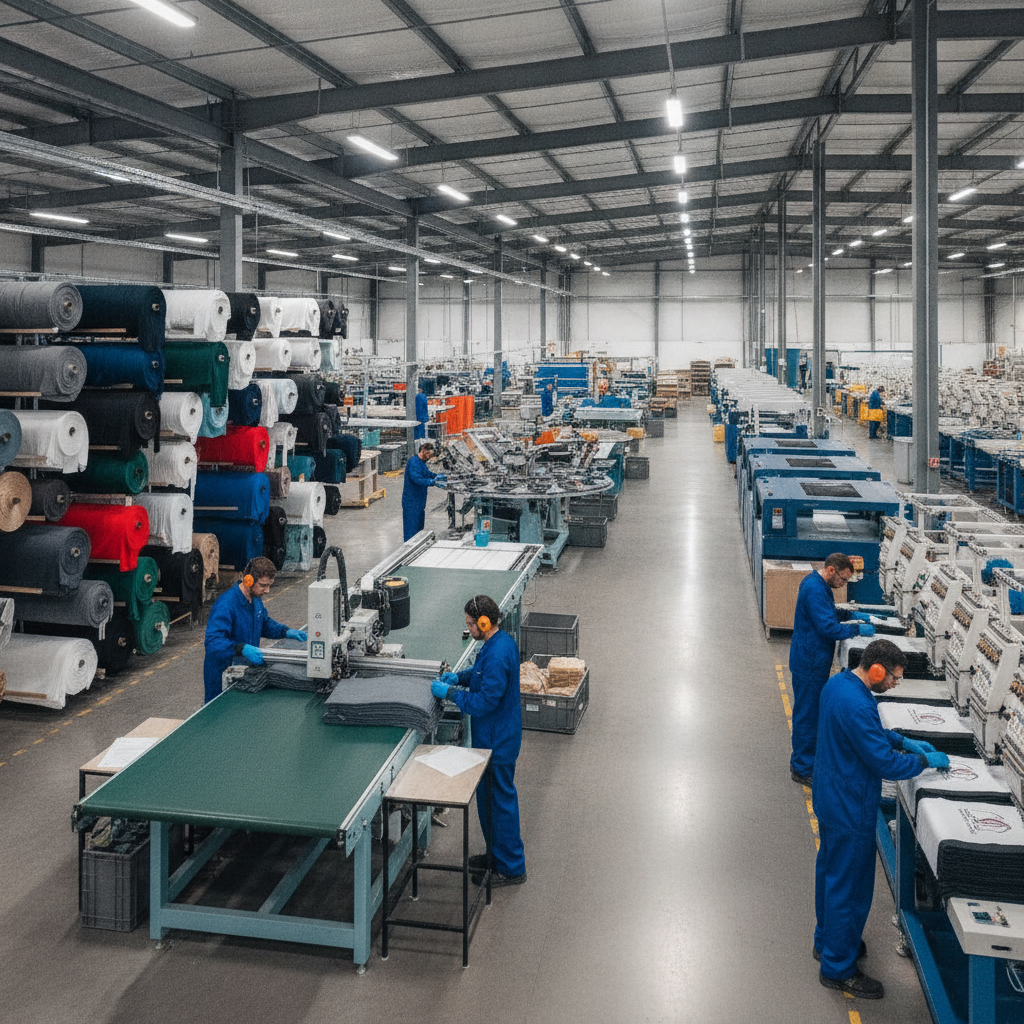
Custom t-shirt manufacturing is the managed, end-to-end path that turns a brand brief into finished apparel. This custom t-shirt manufacturing process guide explains each stage—from fabric to dispatch—so New Delhi teams can ship on time with consistent fit, accurate color, and durable logos across corporate, event, and uniform programs.
By Dev Kapair | Last updated: June 27, 2026
At a Glance
Use this practical overview to align procurement, design, and factory teams. It maps the journey from brief to dispatch, shows when to use screen, DTF, sublimation, or embroidery, and lists quality targets (GSM ranges, stitch density, tolerance bands) that reduce rework and stabilize delivery timelines in New Delhi.
Skim this summary, then jump to the section you need most.
- What is custom t-shirt manufacturing?
- Why this process matters for brands
- How the process works (step-by-step)
- Decoration methods and trade-offs
- Best practices that prevent defects
- Tools and resources checklist
- Case studies from New Delhi
- FAQ
- Conclusion + key takeaways
What Is Custom T-Shirt Manufacturing?
Custom t-shirt manufacturing is a defined workflow that converts a brand’s brief into bulk or small-batch apparel using specified fabrics, patterns, decoration (printing/embroidery), assembly, finishing, and logistics. The goal is repeatable fit, accurate color, and logo durability at the volumes your rollout demands.
Kapair T-Shirt specializes in this end-to-end workflow for B2B buyers in New Delhi. Since 2015, we’ve supported corporate uniforms, event merchandise, and branded apparel through fabric selection, design proofing, screen printing, DTF printing, sublimation, and embroidery—followed by sewing, finishing, and dispatch. Our catalog spans polo t-shirts, round neck t-shirts, hoodies, sweatshirts, sports jerseys, wind jackets, formal shirts, and corporate uniforms.
Clear specifications early are everything. For example, cotton tees often plan for 3–5% shrinkage; that informs pattern grading and tolerance bands. Corporate t-shirts typically sit between 160–220 GSM for breathability and durability. For heavy-use uniforms, 220–280 GSM can add structure. These numbers set expectations, reduce remakes, and protect brand consistency.
To see product scope and service flow in the city, explore our custom t-shirt manufacturer in Delhi hub for polos, round necks, hoodies, and managed logistics across departments.
Why the Process Matters for B2B Brands
A disciplined process cuts waste, locks timelines, and protects brand equity. When teams align on specs, proofs, and QC gates, you prevent reprints, avoid fit surprises, and ship reliably—critical for HR onboarding kits, corporate events, and uniform refreshes in New Delhi.
Brands live on deadlines. Launches and events don’t move just because apparel slips. A gated flow—brief, sampling, first-article approval, inline QC, final inspection—keeps risk low. We target 8–12 stitches per inch (SPI) on core seams for durability, shoulder taping on daily-wear tees, and chest-width tolerance bands of ±0.5 inch during inline checks to prevent size drift.
Decoration choices also carry business impact. Vector artwork (or 300 DPI at print size) keeps logos crisp. Plastisol screen prints typically cure around 300–320°F; DTF transfers press around 290–320°F depending on film and adhesive. Correct windows preserve color fidelity and hand feel, minimizing returns.
Still choosing between polos and tees for different roles? Our polo shirts vs round neck t-shirts guide helps teams balance formality, ventilation, and movement by department.
How the Process Works: Step-by-Step
Follow a nine-stage workflow: discovery, fabric selection, sampling, pattern/marker making, cutting, decoration, sewing, finishing, and QC/dispatch. Each gate locks decisions and reduces rework, which keeps New Delhi timelines predictable for corporate and event programs.
End-to-End Workflow (9 stages)
- Discovery & Brief
- Define use-cases (HR kits, events, field teams), size curves, and SKU colors.
- Lock GSM, fabric blend, knit (single jersey for tees, pique for polos), and fits.
- Record decoration method, placements, and Pantone targets in a tech pack.
- Useful planner: our bulk order planning checklist for timelines and size curves.
- Fabric Sourcing & Testing
- Pick fibers (100% cotton, poly-cotton, performance blends) based on climate and wear.
- Test shrinkage, pilling, and color fastness; plan 3–5% shrink for cotton.
- Decide GSM: 160–180 for breathability; 180–220 for daily use; 220–280 for structure.
- Sampling
- Produce a size set plus one decorated prototype at print size.
- Validate hand feel, placements, thread/ink colors, and finishing cues.
- Sign off in writing; note any deltas before bulk.
- Pattern & Marker Making
- Grade sizes using approved fit blocks; reflect shrinkage expectations.
- Optimize markers to reduce fabric waste by 2–5% with smart nesting.
- Bundle cut parts with labels for traceability across lines.
- Cutting
- Lay rolls consistently; maintain grainline and layer alignment.
- Use manual or automated cutting; verify edges and notches post-cut.
- Decoration
- Apply screen prints, DTF transfers, sublimation, or embroidery per artwork and fabric.
- Run small trials to validate press temperature/time and wash durability.
- Sewing & Assembly
- Maintain 8–12 SPI; reinforce stress points (shoulders, necks, hems).
- Attach size/care labels and trims; audit seam consistency by bundle.
- Finishing
- Fully cure/dry prints; steam/press to remove handling creases.
- Fold, size-sticker, barcode (if required), and pack by distribution plan.
- Quality Control & Dispatch
- Use inline checks and final inspection; many teams align to AQL 2.5 for general apparel.
- Cartonize, seal, and stage by drop point; include manifests for quick GRN.
| Stage | Primary Owner | Output/Decision |
|---|---|---|
| Brief | Buyer + Kapair | Locked specs (GSM, fit, colors, method) |
| Sampling | Kapair | Approved decorated prototype + size set |
| Marker/Cutting | Kapair | Cut panels with ID tags |
| Decoration | Kapair | Printed/embroidered panels within spec |
| Sewing | Kapair | Finished garments with trims |
| QC & Dispatch | Kapair | Inspection report + cartons |
For New Delhi rollouts, lock delivery windows early and schedule a first-article inspection on the first production hour. If you’re mapping order sizes, our planner on how to plan a bulk order helps create realistic timelines and size curves for smoother receiving.
Decoration Methods, Use-Cases, and Trade-offs
Match decoration to artwork, fabric, and quantity. Screen printing shines for large runs with spot colors, DTF handles complex multi-color logos and quick turns, sublimation bonds best with polyester for all-over effects, and embroidery adds premium texture for polos and corporate uniforms.
There’s no universal “best” method—only the best fit per brief. Use this comparison to align stakeholders quickly.
| Method | Best For | Fabric Fit | Notes |
|---|---|---|---|
| Screen Printing | Large quantities, spot colors, bold graphics | Most tees (cotton/poly blends) | Common mesh: 110 for solids; 156–230 for detail. Curing typically 300–320°F. |
| DTF (Direct-to-Film) | Fast turns, gradients, many colors | Broad fabric compatibility | Press windows often 290–320°F; great for small batches and pilots. |
| Sublimation | All-over, photographic prints | Polyester-rich fabrics | Typical cycle: 380–400°F for 45–60 seconds; dye bonds into fibers. |
| Embroidery | Polos, uniforms, premium texture | Pique, twill, heavier knits | Logos often 5k–10k stitches; stabilizers prevent puckering. |
When to choose each method
- Screen printing: High volumes, few colors, long-term programs (lower per-unit at scale).
- DTF: Multi-color logos, gradients, variable data SKUs, or tight timelines.
- Sublimation: Polyester jerseys and all-over patterns where breathability matters.
- Embroidery: Polos and outerwear where a textured, premium mark elevates perception.

Best Practices That Prevent Defects
Write airtight tech packs, test before you scale, and inspect early and often. These three moves—clear specs, pre-production trials, and inline QC—lower reprints, stabilize lead times, and keep brand colors consistent across batches in New Delhi.
Technical checkpoints
- Tech pack completeness: Include GSM, fiber content, knit type, shade standards, decoration placements, and size charts. Add shrinkage expectations (for example, 3–5% cotton) and tolerance bands (±0.5 inch on key points).
- Artwork readiness: Provide vector files or 300 DPI bitmaps at print size. Specify Pantone targets and proof on actual fabric.
- Decoration trials: Run wash tests (3–5 cycles) and rub tests on pre-production units. For embroidery, confirm backing type, thread, and density to avoid puckering.
- Cure validation: Use a contact thermometer or probe strip to confirm 300–320°F plastisol cure; under-cure leads to cracking and poor wash performance.
- Seam durability: Aim for 8–12 SPI and shoulder taping on daily-wear tees; bar-tack critical stress points.
- Inline QC & AQL: Catch issues when they’re cheap to fix. Many apparel teams align to AQL 2.5; agree on sampling plans in advance.
Process accelerators
- First-article sign-off: Approve the earliest bulk unit before scaling the line.
- Color management: Keep a signed shade band and ink recipe card at press; 500–5,000+ units stay consistent when operators reference the same standards.
- Marker optimization: Smart nesting can reduce fabric waste by 2–5%. Maintain roll traceability for audits and reorders.
- Labeling and trims: Pre-kit size labels and care labels by bundle to reduce sewing delays.
Local considerations for New Delhi
- Plan dispatches to avoid peak urban traffic windows when possible; locking pickup slots a day ahead smooths freight handoff.
- Account for monsoon humidity (June–September) by extending drying/curing buffers and using dehumidifiers around print lines.
- For multi-site events within New Delhi, stage partial shipments to de-risk venue-day shortages without overloading a single hub.
Exploring supply options for city teams? See our Delhi t-shirt suppliers & printing overview for how we organize intake, decoration, and dispatch for New Delhi programs.
Tools and Resources Checklist
Equip operators and QC with calibrated gear and common references: accurate heat presses, screen meshes, stabilizers, and wash-test protocols. Pair tools with clear SOPs so production, quality, and dispatch resolve issues fast and speak a shared language.
Production & QC essentials
- Heat press with accurate surface temperature (calibrate monthly with a contact thermometer).
- Screen frames in multiple meshes (110, 156–230) and squeegees with known durometer.
- Embroidery hoops and stabilizers (tear-away, cut-away) matched to fabric weight.
- Wash test protocol (3–5 cycles), crocking/rub tests, and shrinkage checks on size sets.
- Quality templates with AQL tables and POMs (chest, body length, sleeve, shoulder).
- Marker-making software/services to optimize fabric yield; maintain roll IDs for traceability.
Reference guides
- Decoration options summarized in the Shopify print-on-demand t-shirt guide for non-technical stakeholders.
- Embroidery do’s/don’ts and stabilizer basics in Shopify’s embroidery overview.
- Operational planning tips in the Shopify apparel operations guide—useful for intake and pickup workflows.
Need a quick sanity check? Share your brief and timeline. We’ll recommend fabric, print method, and a sampling plan tailored to your rollout. Start here: T-shirt manufacturer in Delhi.
Case Studies: New Delhi Production Scenarios
These case notes show how locking specs, artwork, and QC gates avoids late surprises. The wins are tangible: fewer reprints, on-time dispatches, and brand-consistent results across departments and venues in New Delhi.
1) Enterprise onboarding tees (HR kits)
A New Delhi enterprise requested 1,200 round-neck tees for HR kits. We standardized fabric at 180 GSM cotton with shoulder taping, used DTF for multi-color logos, and validated cure near 305°F. Inline measurement checks (±0.5 inch) kept sizes consistent. Result: two-wave dispatch aligned to onboarding cohorts.
2) Field team polos (daily uniforms)
For an outdoor field team, we produced 900 pique polos (200–220 GSM) with left-chest embroidery (~6,800 stitches). Backing and density tuning prevented puckering, and bar-tacks at plackets improved durability. Outcome: uniforms that held shape after repeated washing.
3) Conference merchandise (fast turn)
An event organizer needed 600 tees with gradient artwork on a tight timeline. DTF handled color complexity; first-article approval happened in hour one of bulk. We staged packing by size and color to speed venue-day distribution. Dispatch completed on schedule.
4) Multi-department corporate drop
Different departments wanted distinct looks: polos for client-facing roles and round-necks for technical teams. We ran embroidery for polos and screen prints for bold solid-color graphics on tees. Our polo vs tee guidance helped stakeholders decide quickly without design drift.
5) School sports jerseys (breathable + bold)
A New Delhi school sports program required breathable jerseys with vivid numbers. We used sublimation on polyester-rich fabrics at 380–400°F for 45–60 seconds, which bonded dye into fibers. The result: colors that stayed bright after repeated games and washes.
6) Startup swag packs (small-batch variety)
A startup needed small-batch SKUs across tees and hoodies. DTF supported variable colorways and lower MOQs while keeping logos sharp. We created a repeatable SOP so reorders slotted into the same line with minimal onboarding time.
7) Hospitality uniforms (stain-resilient blends)
Front-of-house teams asked for polished polos with stain resilience. We selected a poly-cotton blend around 200 GSM and embroidered a left-chest logo using stabilizers to maintain flatness. A pilot wash test (5 cycles) validated color fastness before scale.
8) Tech conference staff (visibility + comfort)
For long event days, staff needed breathable tees with prominent, crisp branding. Screen prints with proper curing delivered strong visibility, while 160–180 GSM cotton blends kept heat buildup manageable under stage lighting.
Frequently Asked Questions
Here are direct, practical answers to the questions we hear most from New Delhi procurement, HR, and event teams. Each response is short, specific, and easy to share with stakeholders.
Which print method should we choose for a multi-color logo?
DTF handles gradients and many colors well and presses on most fabrics. For corporate tees under time pressure, it’s a strong pick. For spot-color graphics at higher volumes, screen printing stays efficient. Embroidery works best on polos and uniforms where you want a premium, textured mark.
How do we keep sizes consistent across a big rollout?
Begin with an approved size set, define tolerance bands (for example, ±0.5 inch on chest), and do inline checks every bundle. Use first-article approvals before scaling and mark patterns clearly. These controls prevent drift and save rework later.
What GSM is right for employee tees in hot months?
For summer in New Delhi, many teams favor breathable 160–180 GSM single-jersey cotton or blends. If garments face heavy wear, 180–200 GSM balances airflow and durability. Pair with shoulder taping and 8–12 SPI seams for longevity.
Do we need wash tests before bulk production?
Yes. Run 3–5 wash cycles on pre-production units to confirm color fastness and print/embroidery durability. It’s the simplest way to avoid reprints and returns, especially when rolling out uniforms or event tees on firm deadlines.
Can you support both small batches and bulk?
Yes. Our workflow handles pilot runs and large rollouts. We often use DTF for small, multi-color SKUs and shift to screen printing or embroidery for stable, high-volume programs—without changing the approved look and feel.
Conclusion and Next Steps
Successful apparel programs follow a clear brief, data-backed method selection, and early QC. When teams align on specs and checkpoints, you cut waste, hit timelines, and deliver consistent, on-brand tees for every department or event across New Delhi.
Here’s a quick recap as you plan your next run:
- Write complete tech packs: GSM, colors, placements, size charts, tolerances.
- Choose decoration by artwork, fabric, and volume—not by habit.
- Test early: wash tests, first-article approvals, and inline QC at agreed AQL.
- Stage dispatch to match venue or department rollout cadence.
Key takeaways
- Process beats ad hoc: brief → QC gates prevent reprints.
- Numbers matter: GSM, SPI, cure temps, and tolerances keep results consistent.
- Match method to mission: screen, DTF, sublimation, and embroidery all have strong niches.
Ready to align your brief with the right method and timeline? Visit our custom manufacturing in Delhi hub, compare polos vs tees, or use our bulk order planner. Book a discovery session in New Delhi—we’ll help you ship on time, every time.

